Diamond Prices
Read more

Diamond testers: which one do you need, and what can it miss?
Pen testers, moissanite testers, UV screeners and the lab: what each one catches, what fools it, and which to use for your stone.
Short answer: a basic heat tester tells a diamond from glass and cubic zirconia. It says “diamond” for moissanite, and every tester says “diamond” for a lab-grown stone. To be sure, use a multi-tester for moissanite and a lab report for natural vs. lab-grown.
Free tool · 5 minutes
6 home tests that catch most fake diamonds
Rule out glass, cubic zirconia and other common imitations in five minutes, with no tester. A stone that passes isn’t proven real: only a gem lab can confirm that.
Start the 6 tests →Interactive
Which tester do you need?
Tell us what you want to rule out. We’ll show the tester that can do it, and what it still can’t.
The tools
The four kinds of tester
From the €20 pen to the gem lab. Each one catches more than the one before.
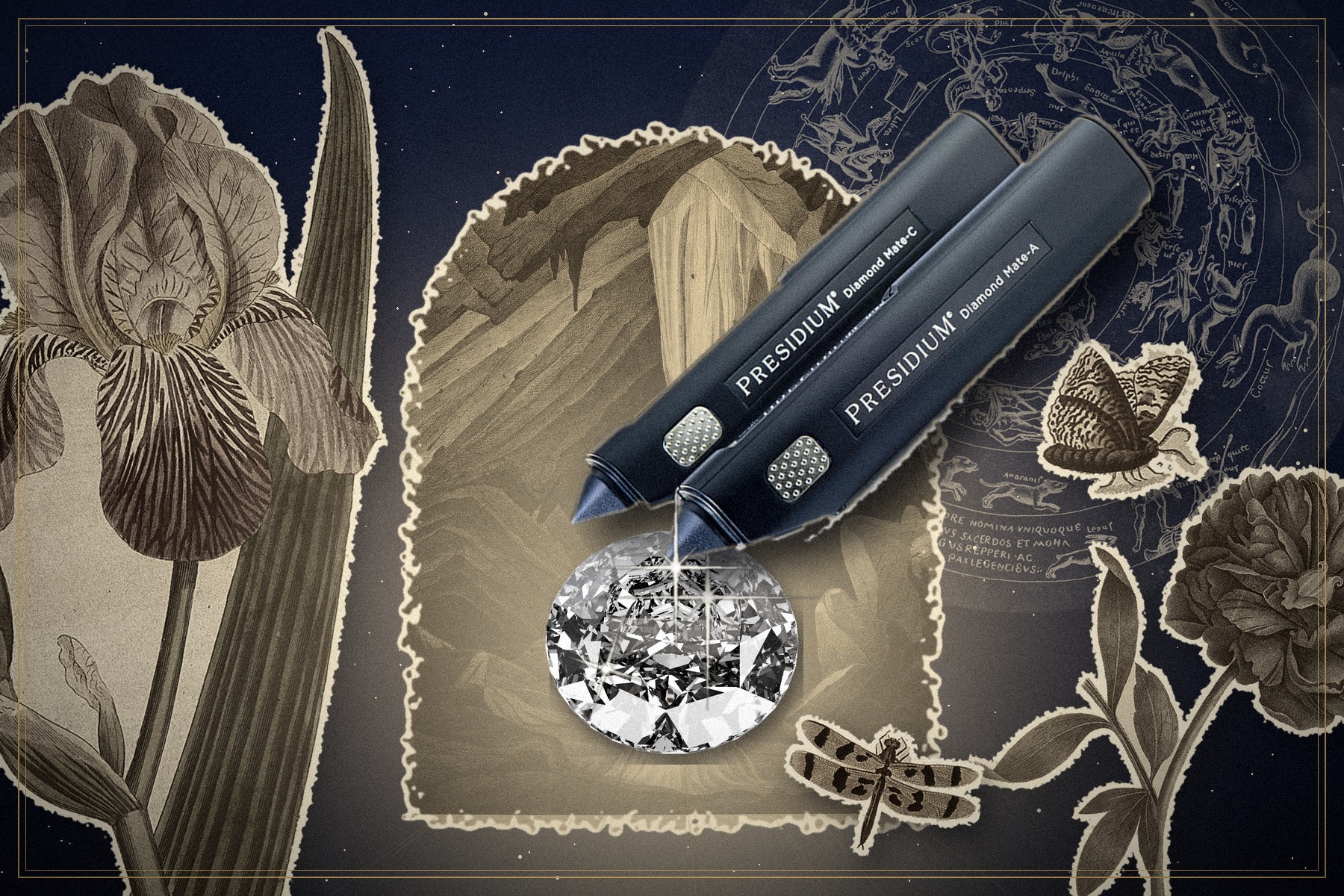
Photo: Presidium · Engraving: Wellcome Collection, CC BY 4.0
1 · Heat (thermal) testerThe classic pen tester
A heated tip measures how fast the stone draws heat away. Diamond conducts heat very well, glass and cubic zirconia don’t.
Catches: glass, CZ, most white sapphire · Fooled by: moissanite, lab-grown
Best brands: Presidium Diamond Mate · Ceres Diamond Selector II
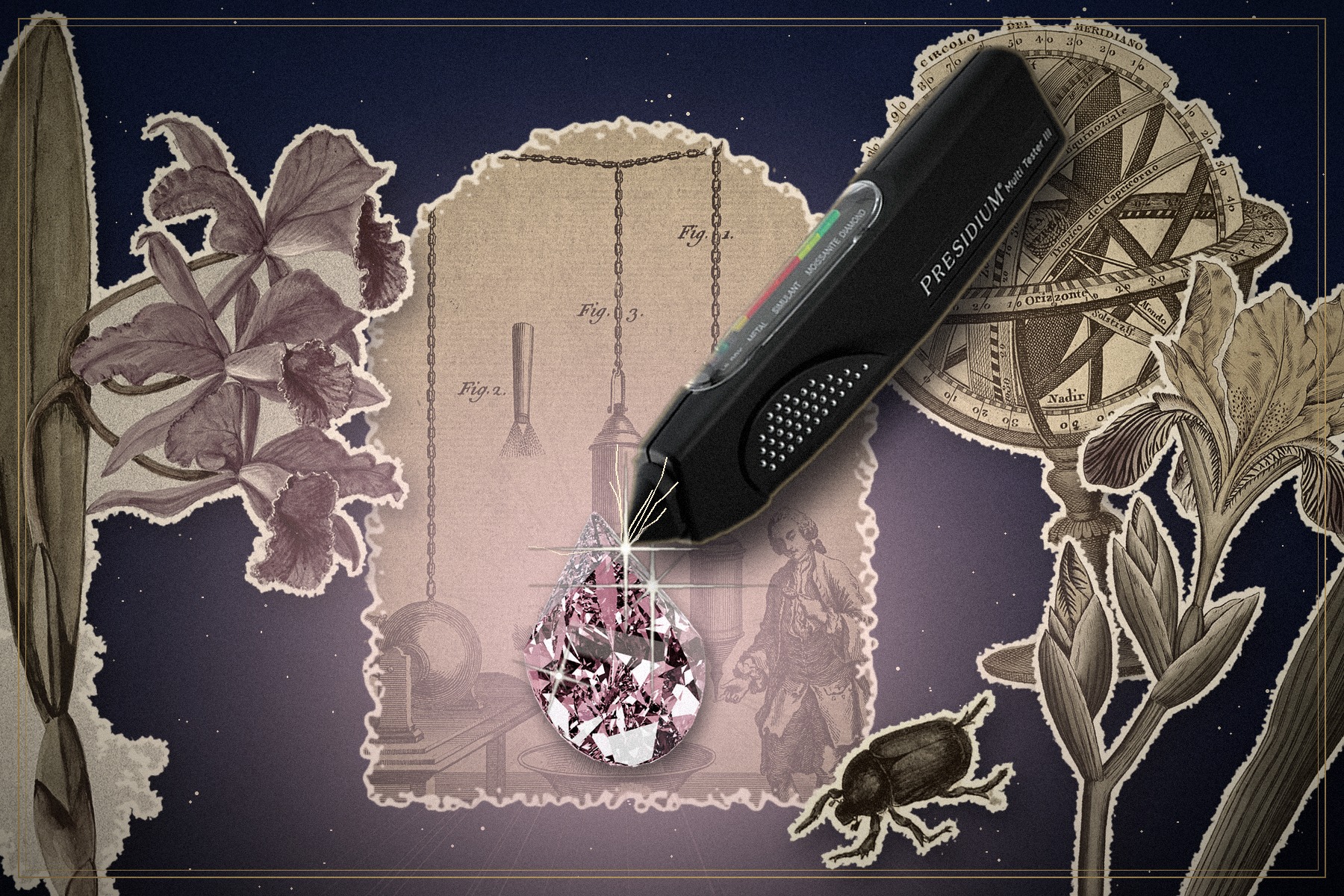
Photo: Presidium · Engraving: Wellcome Collection, CC BY 4.0
2 · Multi-testerHeat + electricity
Adds an electrical test. Moissanite conducts electricity, diamond almost never does. Touching a metal prong gives a false reading: test loose or on the table.
Catches: everything above + moissanite · Fooled by: lab-grown
Best brands: Presidium Multi Tester III · Presidium Duo Tester II
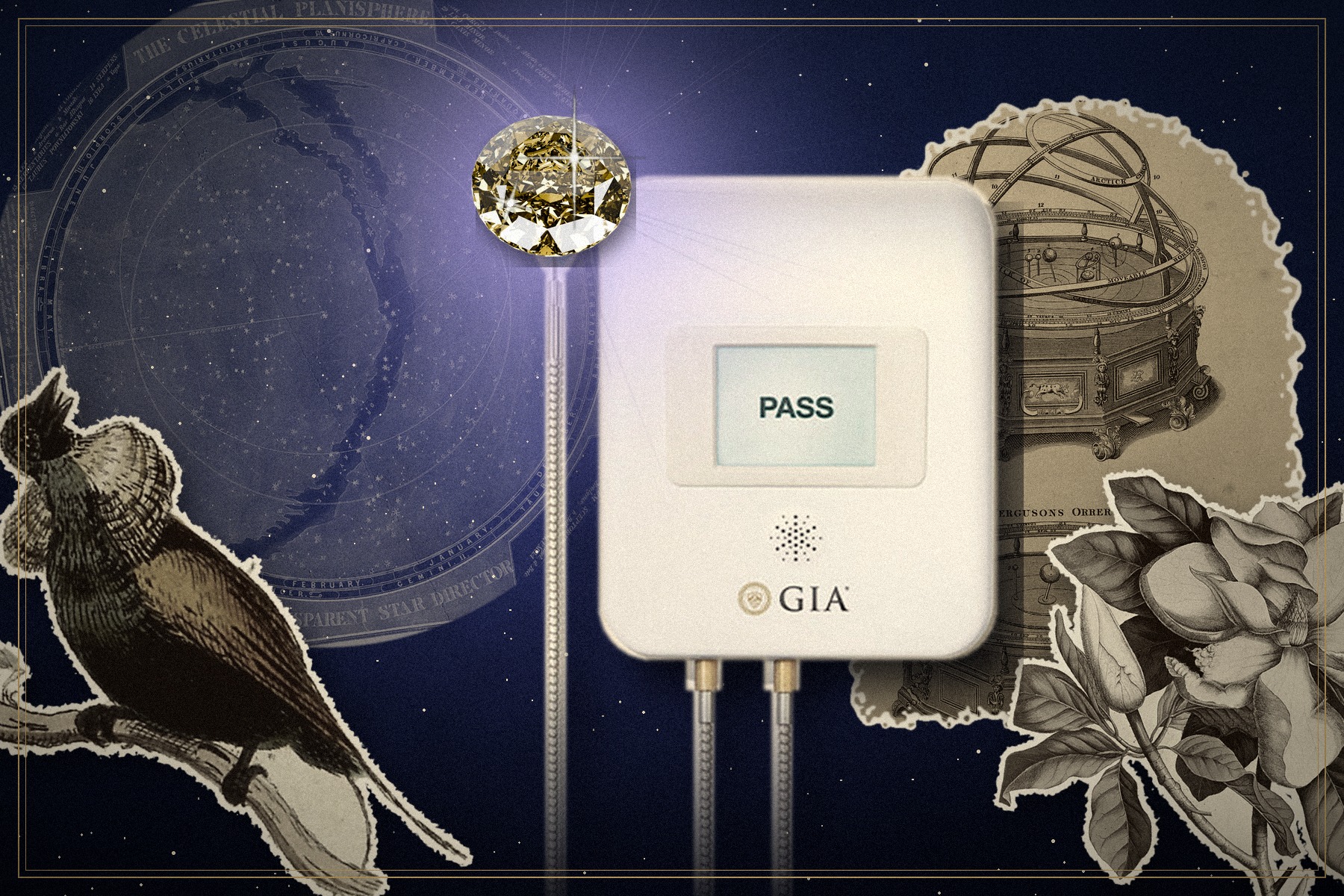
Photo: GIA · Engraving: Wellcome Collection, CC BY 4.0
3 · Lab-grown screenerUV and spectroscopy devices
Trade machines (GIA iD100, HRD’s D-Screen and similar) read how the crystal grew. They pass natural stones in seconds and refer suspects to a lab.
Catches: most lab-grown, some HPHT treatment · Owned by: traders, larger jewellers
Best brands: GIA iD100 · De Beers SynthDetect · Presidium ARi · HRD D‑Screen
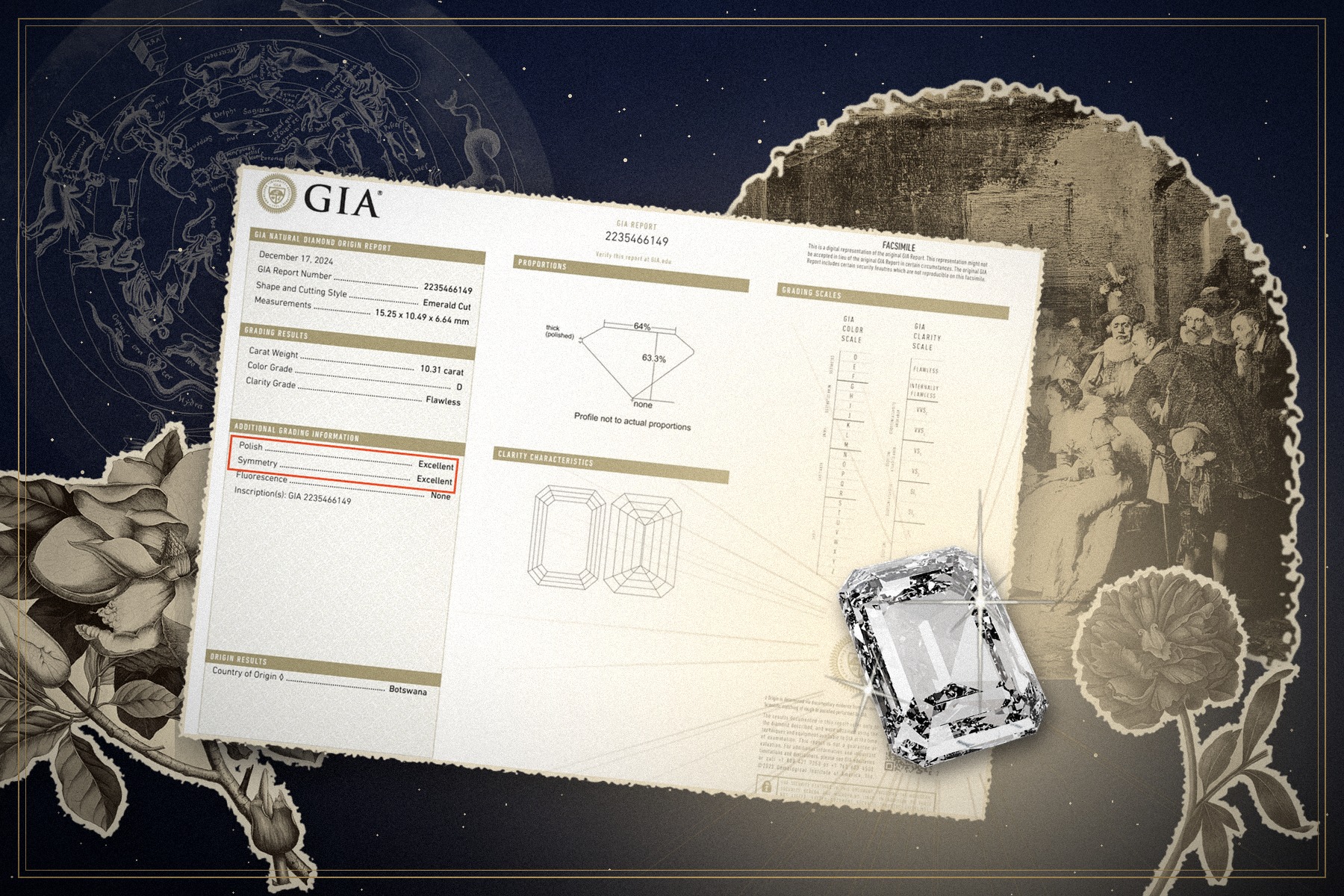
Photo: Ajediam · Engraving: Wellcome Collection, CC BY 4.0
4 · Gem labGIA, HRD, IGI
The final word. A lab report states natural or laboratory-grown, any treatment, and the grades. Many labs also laser-inscribe the report number.
Catches: everything · Takes: a few days
Best brands: GIA · HRD Antwerp · IGI
Testers need practice: a cold stone, a dirty surface or a metal prong all give wrong readings. Test several facets.
For the trade
Testing rough diamonds
Rough can be coated or be a synthetic crystal, and a tester only reads the surface.
- Coated rough: polish a small window on the surface first, then test on that window.
- Synthetic rough: CVD crystals are flat and square, HPHT crystals often cubo-octahedral. Have any suspect parcel screened.
- Buy with paperwork: rough crosses borders with a Kimberley Process certificate. No certificate, no deal.
Selling rough? Ajediam considers serious offers from the trade, not from private sellers. Contact our team →
FAQ
Quick answers
Can a diamond tester be wrong?
Yes. A basic heat tester says “diamond” for moissanite, and every tester says “diamond” for a lab-grown stone, because it is one. A cold stone, a dirty surface or a touch on a metal prong also gives false readings. Test several facets, and treat a “diamond” beep as a first filter, not as proof.
Does a diamond tester work on lab-grown diamonds?
It beeps “diamond”, because a lab-grown diamond is real diamond: same carbon, same heat conduction. Telling natural from lab-grown needs a screening machine (like GIA’s iD100) or a gem lab report.
Is there an online diamond tester?
No app or camera can test a stone. What you can do online is our 6 home tests: five minutes, no tools, and they catch glass, cubic zirconia and most other common imitations. A stone that passes still needs a lab to confirm it.
Which diamond tester do jewellers use?
Most jewellers keep a multi-tester (heat + electricity) on the counter, so they can rule out both simulants and moissanite in seconds. Traders add a lab-grown screener. Valuable or suspect stones go to GIA, HRD or IGI.
Is a cheap diamond tester pen worth buying?
For a quick first check, yes: under €30, it separates diamond from glass and cubic zirconia. But it can’t catch moissanite, the most common “fake” sold today. If you buy one tester, buy a multi-tester.
My stone passed the tester. Is it a real diamond?
It’s not glass or cubic zirconia. It could still be moissanite (on a basic tester) or lab-grown (on any tester). Only a lab report, or an expert with screening instruments, can confirm a natural diamond.