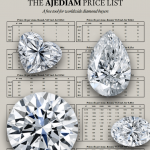
Diamond Prices
Read more

Identification
Differentiate genuine diamonds from imitations and fakes.
Navigate the complex world of diamond identification with our comprehensive guide. This section is dedicated to helping you differentiate genuine diamonds from imitations and fakes, covering the various methods, tools, and even laboratory techniques employed by experts. Gain insight into the physical principles that govern diamond properties, and learn how to confidently assess the authenticity of these precious gemstones, ensuring you always make well-informed decisions.
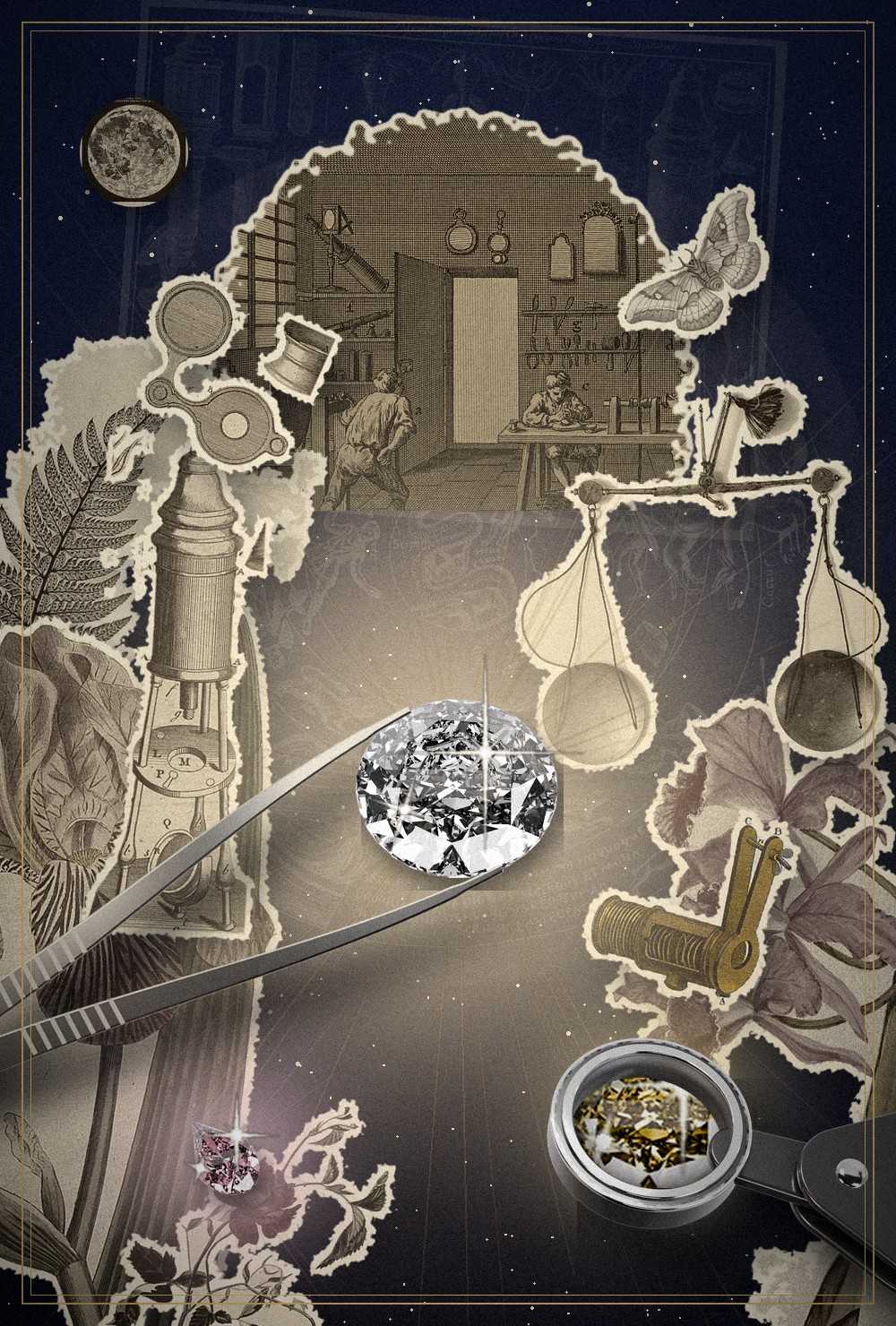
From tweezers to the microscope: what each tool does, who needs it, and the kit we'd put together for you.Short answer: to look at a diamond properly you need four things: diamond tweezers, a 10× triplet loupe, a daylight lamp and a lint-free cloth. Traders add a carat scale, a caliper, a UV light and...
keep readingHow do you determine the specific gravity, density, hardness and refractive index – all specifications and characteristics of gemstones? See more about natural gemstones in this table. The four classic gemstones are: Diamond, Ruby, Sapphire and Emerald. Other minerals include: moissanite, agate, alexandrite, Amethyst, Aquamarine, cat's eye, citrine, garnet, jade, lapis lazuli, moonstone, onyx, opal, peridot,...
keep reading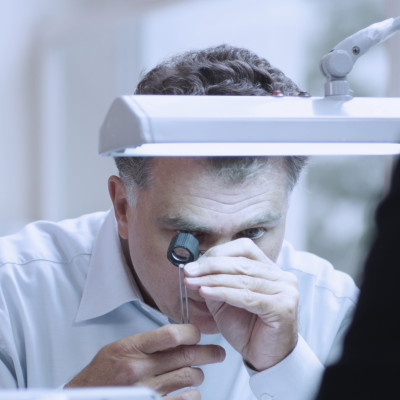
Ajediam's pick for the best classes around the world Do you want to enjoy the microscopic world of diamonds with the eyes of a professional? The beauty of gemstones naturally draws many aesthetic lovers. Observing their beauty is enough for some. Others, however, may wish to make a living out of it. The diamond trade may...
keep reading
The Gemological Institute of America, or GIA, diamond testing laboratory: a third-party review. In the diamond trade, nothing is left to chance. Hundreds of third-party laboratories issue diamond certificates that guarantee the specific qualities of any stone. However, not all certificates are made equal. Those that come from more reputable laboratories can have a positive...
keep reading
Check the report number in one minute, find the matching inscription on the stone, spot a fake certificate, and know what a certificate does and doesn't guarantee.Short answer: enter the report number on the lab's own website. If the weight, measurements and grades match your paper, and the same number is laser-inscribed on the stone's...
keep reading
Six home tests that rule out the most common imitations in five minutes, the myths that can break your stone, and the one check that really settles it.Short answer: home tests can tell a diamond from glass or cubic zirconia. They cannot tell it from moissanite or a lab-grown diamond. For that you need a...
keep reading
Pen testers, moissanite testers, UV screeners and the lab: what each one catches, what fools it, and which to use for your stone.Short answer: a basic heat tester tells a diamond from glass and cubic zirconia. It says "diamond" for moissanite, and every tester says "diamond" for a lab-grown stone. To be sure, use a...
keep reading